 KrugerGuide.com
Independent Kruger Trip Planning
KrugerGuide.com
Independent Kruger Trip Planning
Check Availability
Same rates as booking direct
KrugerGuide.com
Independent Kruger Trip Planning
Open-vehicle game drives into the Berg-en-Dal section of Kruger, minutes from Malelane Gate. Conservation fees are included in your rate, so there's nothing extra to pay at the gate on the day.
Rates valid until 31 Oct 2026 · No obligation to book
Availability moves fastest in peak season, so it's worth locking in your safari as soon as your travel dates are firm. To check availability and get a confirmed rate, send:
Most enquiries take less than 2 minutes.
All three formats run the same open safari vehicle and the same qualified field guide — the real difference is simply how much of the day you're willing to give up for it. Pickup covers Malelane, Pestana Lodge, Marloth Park, Ngwenya Lodge and Komatipoort. Pricing shifts slightly depending on exactly where you're picked up from, so we'll confirm your rate rather than have you guess at it.
A full day buys your guide room to work both of Kruger's genuinely active windows — first light and late afternoon — with a quieter stretch through the middle where the bush mostly does its own thing. If this is your first Kruger safari, or you just want the fullest possible look at the Malelane section, this is the format that earns its keep.
A morning drive catches the single best wildlife window Kruger has to offer, then gets you back before the midday heat sets in properly. It's the format we point families with younger kids toward most often, and it suits anyone treating the safari as one part of a bigger Lowveld trip rather than the whole day.
The afternoon drive catches Kruger as the heat drops and animals get moving again after the midday lull. It's shorter and more tightly routed than a morning drive — your guide's working against the gate's closing time — but the late light makes for genuinely better photography, and it's a solid fit if you land in Malelane mid-morning and want to be on safari that same day without a 4:30am wake-up.
Not sure which format suits your group? Tell us your dates and we'll give you an honest recommendation.
Ask Us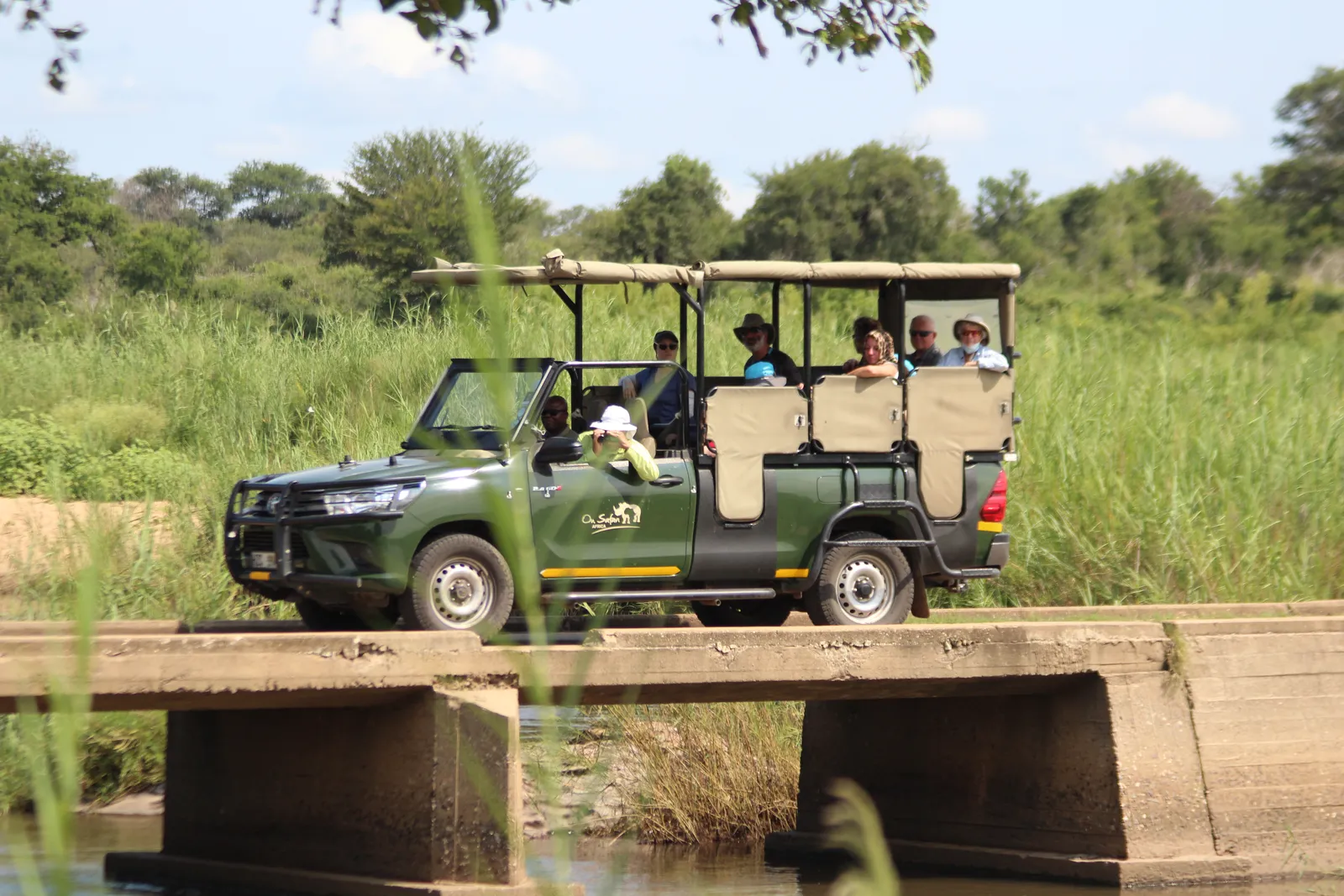
Our Malelane safaris are arranged through our trusted partner, On Safari Africa. You'll travel in the same open safari vehicles used on their scheduled departures and pay the same rate you'd receive booking directly.
We arrange Malelane safaris through On Safari Africa, an operator that runs guided game drives into this exact section of Kruger every week — not a general tour operator adding safaris to a broader offering. Their qualified field guides know the Berg-en-Dal terrain, the current road conditions, and where sightings have been happening, and their conservation fees are built into the rate rather than left for you to sort out separately at the gate.
You pay the same rate you'd get booking with them directly. Enquiring costs nothing and commits you to nothing.
For guests who want the detail before they book — the terrain, the timing, and what to expect.
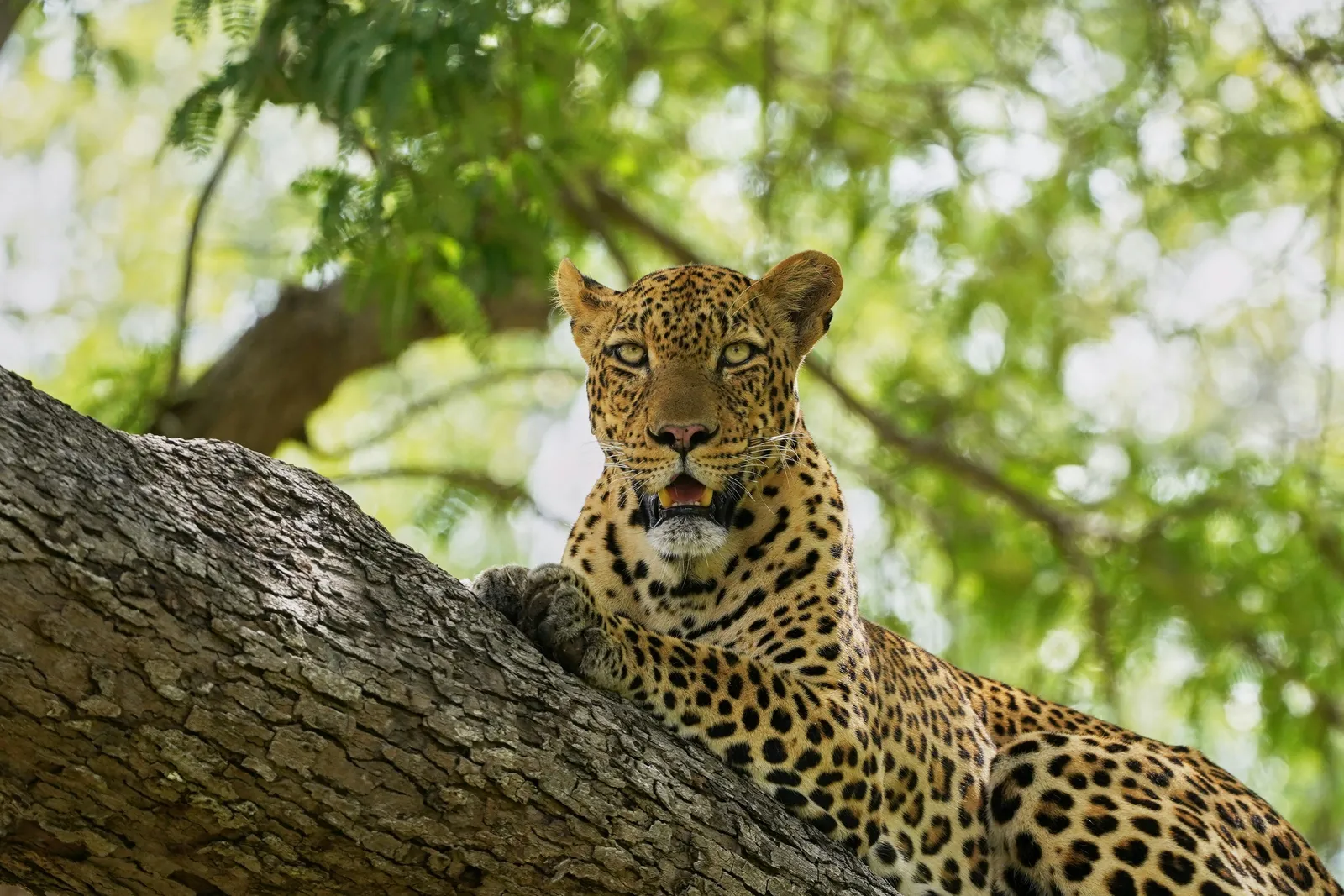
Say "Kruger" to most people and they picture flat open plains and slow river roads — the Lower Sabie, Crocodile Bridge kind of scenery. Malelane Gate doesn't lead there. It opens onto a south-western pocket of granite hills, rocky koppies and dense Mountain Bushveld, and the wildlife here follows the terrain. White rhino turn up often, especially around the area's waterholes. Leopard and wild dog are both regular sightings, and that's no coincidence — leopard in particular love this kind of rocky ground. Klipspringer and mountain reedbuck live here and nowhere else in Kruger, if that's the kind of detail that gets you excited.
None of this locks your guide into one small patch, either. Once you're through the gate, the whole southern road network is open to them — including the plains further east, where lion sightings tend to be strongest. The route isn't a fixed loop; it moves with whatever's actually happening that day.
White rhino, leopard and wild dog are all regularly seen in the Berg-en-Dal area, alongside klipspringer and mountain reedbuck — species specific to this rocky terrain.
The Malelane Gate bridge over the Crocodile River is a known spot for Giant Kingfisher, Saddle-billed Stork and African Sacred Ibis — mention a birding interest when you enquire and your guide can factor it into the route.
Departure is early — before first light — so you're at the gate the moment it opens, when the wildlife activity is at its most consistent all day.
Roughly 10 hours, door to door, on a full-day safariOn timing: the early start isn't negotiable — the first hour after the gate opens is consistently the most productive wildlife window of the day, and arriving late means missing it. Your guide adjusts the route through the day using radio reports from other vehicles and current road access, rather than following one fixed loop.
Kruger's conservation fees are payable to SANParks separately from any operator's tour cost, and self-drivers pay them directly at the gate: R602 for international adults, R134 for SA residents, and R301 for SADC adults, with children aged 2–11 at 50% and under-2s free (2025–2026 rates). Some operators quote you the drive and leave you to sort the conservation fee yourself.
Ours don't. Conservation fees are built into every rate on this page, so the price you're quoted is the price you pay — no surprise line-item at the gate, and nothing extra to arrange on the day.
Your guide collects you before first light — usually somewhere between 4:30 and 5:30am, depending on the month — timed to land you at Malelane Gate right as it opens. Inside, the Berg-en-Dal section runs on a mix of tar and gravel, though it's worth knowing that most of Kruger's dirt roads are still formally closed following the January 2026 floods, with a handful open as detours around ongoing tar repairs. Guides who drive this section daily know exactly which routes are live right now — a self-driver working it out from scratch would be guessing.
Bring more water than feels necessary. Summer temperatures inside the park regularly clear 35°C by mid-morning, and you'll go through it faster than you'd expect. Light, long-sleeved layers handle the sun better than you'd think. Winter mornings (June–July) are a different problem entirely — the vehicle's moving at speed in the dark before sunrise, and it's genuinely cold. Pack a fleece, gloves and a beanie no matter how warm the afternoon forecast looks.
One thing worth knowing before you book: children under 3 aren't permitted on open safari vehicles, and ages 4–5 are only accepted on private bookings. Our guide to taking children on a Kruger safari covers all of it in more detail.
The gate's proximity means minimal transfer time and maximum time in the park — the natural fit if you're based in one of these three areas.
Moving between Johannesburg and Mozambique, or Cape Town and the northern Lowveld — a morning half-day fits cleanly into a travel day without derailing it.
Compact terrain, strong rhino sightings, and a guide who works well with kids — though age restrictions apply on open vehicles.
The Berg-en-Dal terrain often surprises first-timers who expect only flat open plains — and a guide's local knowledge does the most work here.
Yes. Every rate on this page includes Kruger's conservation fees. Some operators quote the drive only and leave you to pay conservation fees separately at the gate — ours doesn't work that way.
Included: a qualified field guide, an open safari vehicle, conservation fees, and mineral water. Not included: breakfast and lunch (bring your own or buy at a rest camp) and guide gratuity.
Malelane, Pestana Lodge, Marloth Park, Ngwenya Lodge and Komatipoort. Tell us your specific accommodation when you enquire and we'll confirm pickup timing.
Full-day and morning safaris depart at 05:00 in summer (Oct–Mar) or 05:30 in winter (Apr–Sep), timed to reach Malelane Gate at opening. Afternoon safaris depart at 13:30 in summer or 13:00 in winter.
Yes, a minimum of 2 guests per booking. Larger groups and private vehicles can be arranged — tell us your group size when you enquire.
Children under 3 aren't permitted on open safari vehicles. Children aged 4–5 are accepted on private bookings only. There's no upper age restriction.
You can, with your own vehicle and a valid park permit, but a guided drive gets you a driver who knows current sightings and which roads are actually open — particularly relevant since most of Kruger's dirt roads remain formally closed following the January 2026 floods, with guides best placed to know the current detours.
Most remain formally closed at time of writing, with some open as detours around tar-road repairs. This changes as repairs progress — your guide will know the current access on the day.
Still got a question we haven't covered? Skip the research — just ask us directly.
WhatsApp UsStaying more than one night in the Malelane area? On Safari Africa also runs day tours to Maputo in Mozambique, the Kingdom of Eswatini, and the Panorama Route along the Mpumalanga escarpment — ask us for current rates when you enquire. For everything else worth knowing about the area, see our Malelane planning guide, and if you're travelling with kids, our guide to Kruger safaris with kids walks through the age rules across operators.
Tell us your dates, group size and pickup location. We'll confirm availability and a rate — conservation fees included, same as booking direct, no obligation.